How to Keep Your Child Safe Online This School Year: A Parent’s Cyber Guide
 Published on September 12, 2025
Updated on April 17, 2026
 7 mins to read

Why Back-to-School Is the Perfect Time to Refresh Online Safety Rules
The start of the school year is about more than supply lists and first-day jitters. It’s also when kids reconnect with friends, join new classes, and spend more time online—often with school-issued devices or accounts. That makes it the perfect moment for families to revisit their digital safety strategy and expectations.
Technology offers incredible opportunities for learning and connection, but it also comes with risks that parents must manage. By laying down clear, practical rules now–with age-appropriate explanations behind them–you can build confidence that your child is protected in the months ahead.
The Biggest Online Risks for Kids
Children and teens face a wide range of online threats, and these risks shift as they grow. Younger children may stumble across inappropriate content or accidentally overshare personal details. Teens may face more serious issues such as cyberbullying, online predators, or scams. Common dangers include:
- Cyberbullying: Hurtful messages or exclusion that damage a child’s mental health.
- Inappropriate content: From violent videos to age-inappropriate conversations, children can find themselves in harmful spaces quickly.
- Predators and grooming: Strangers may attempt to build trust to exploit kids.
- Scams and fraud: Phishing links and fake websites target children’s curiosity.
- Oversharing: Posting personal details, location, or photos without realizing the consequences.
Awareness of these risks is the first step in developing a protective plan. The next step is implementing strategies that fit your child’s age and your family’s needs.
Lesson 1: Secure Devices and Accounts
Strong device and account security is the foundation of online protection. Start by teaching children the importance of unique, complex passwords. A password manager makes it easier for older children (and adults!) to keep track of complex logins. Activate parental controls where possible to filter inappropriate content. For school accounts, request details from the school’s IT team on what security measures are already in place and what to do if an incident occurs.
Don’t forget multi-factor authentication (MFA). Adding a second layer of login protection reduces the chance that an outsider gains access to schoolwork or personal messages. Regular updates and security patches help close gaps that attackers might exploit.

Lesson 2: Teach Smart Social Media Use
Social platforms are central to many kids’ social lives, but they also carry significant risks. Begin with privacy settings—review them together so your child knows who can see their posts. Teach kids to ignore connection requests or messages from people they don’t know. Just as important is teaching judgment about what not to post: personal addresses, phone numbers, and revealing photos should never go online.
Encourage kids to think about the “digital footprint” they are creating. Posts can linger long after they are forgotten, shaping reputations and opportunities. Helping them pause before they share fosters healthier, safer habits that last.
Lesson 3: Safe Browsing Habits
The internet is filled with traps designed to deceive. Teach children how to recognize suspicious links, pop-ups, and downloads. Show them how to hover over a link to see where it really leads, and explain why they should never click on emails or messages from unknown senders.
Many phishing attempts rely on fake urgency or stolen branding to fool children into sharing details. Make sure your child knows how to stop and ask you before responding. Encourage them to treat the internet like a neighborhood: some areas are safe, while others should be avoided altogether.
Lesson 4: Balance Screen Time and Mental Health
Online safety isn’t only about security—it’s also about well-being. Too much time on screens can disrupt healthy sleep, reduce concentration, and take a toll on emotional well-being. Setting limits helps children develop balance. Encourage device-free zones, such as during meals or before bedtime, to allow for real family connection.
This is also the time to talk about the pressures of constant connectivity. Encourage kids to recognize when online interactions make them feel stressed or inadequate. Framing digital wellness as part of overall health ensures your child doesn’t just stay safe but thrives both online and offline.
The American Academy of Pediatrics has a wealth of information on its website to help guide you in monitoring your child’s screen time.

Lesson 5: Staying Safe with School Technology and Monitoring
Most schools now provide digital platforms, laptops, or tablets. While these tools are powerful for learning, they also expand the range of risks. Ensure your child understands they should only use school-issued accounts for academic purposes. Mixing personal and school accounts can create vulnerabilities.
Discuss rules for online classrooms, such as not sharing meeting links or passwords. Teach your child to log out after use, especially on shared devices, and to avoid downloading unapproved software. Partner with teachers to understand what safeguards are already in place so your family can reinforce them at home.
Parents can take this partnership further by asking schools direct questions, such as how student accounts are secured, what monitoring tools are in place, and how children should report suspicious messages. It’s also worth clarifying what happens if a device is lost or compromised, so you know what safeguards are already in place and where extra family practices may be needed.
Schools often offer safety and other technology-focused trainings. Participate in these whenever possible to stay updated, especially when it comes to safety-related topics.
Lesson 6: Encourage Open Communication and Monitoring
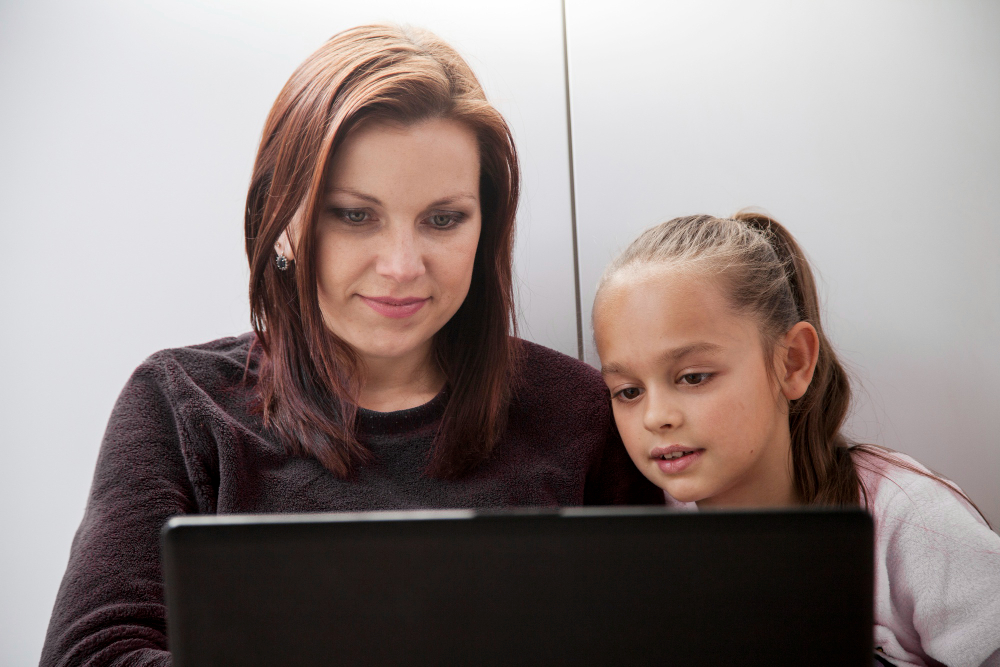
Even the best filters and tools won’t replace trust between parents and kids. Encourage open conversations about what they see online. If something feels wrong, they should know they can come to you without fear of punishment. Regular check-ins build confidence that they won’t be left to handle online challenges alone.
Monitoring plays an important role alongside communication. A practical step is to keep devices in common areas of the home, such as the kitchen, family room, or study nook, instead of bedrooms or isolated spaces like basements. This makes casual supervision natural and discourages risky late-night browsing. Parents can also establish clear rules about when and where devices may be used, which reinforces balance without feeling intrusive.
Role-playing scenarios can help younger children practice what to do if they encounter a stranger online or receive a suspicious message. With teens, ask open-ended questions about their digital life to create space for honest dialogue. When monitoring and communication go hand in hand, children learn that boundaries are there for their safety, not as punishment.
Checklist for Parents: A Back-to-School Cybersecurity Toolkit
Use this checklist to keep your family prepared as the school year begins:
🔐 Secure Devices and Accounts
☐ Review and update all device passwords.
☐ Enable multi-factor authentication on school and personal accounts.
☐ Update software and apps regularly on all devices.
☐ Back up important data, such as schoolwork, to cloud storage or external
drives.
☐ Set rules for downloads—require parental approval for apps, games, or
extensions.
🌐 Protect Your Home Network
☐ Lock down your home Wi-Fi with strong passwords and proper encryption.
☐ Enable safe search settings on browsers and search engines.
☐ Monitor school communication channels to spot potential phishing attempts.
📱 Guide Social Media and Online Behavior
☐ Go over social media privacy settings with your child and adjust as needed.
☐ Teach kids what not to post, including personal information and photos.
☐ Turn off location services on photos, apps, and social media to prevent
oversharing.
☐ Teach your child about digital citizenship and model respectful online
conduct.
👀 Parental Controls and Monitoring
☐ Install parental controls or monitoring apps appropriate for your child’s age.
o Password managers: Bitwarden, 1Password, or LastPass Families.
o Parental control apps: Qustodio, Bark, or Family Link (Google).
o Device-level controls: iOS Screen Time, Windows Family Safety, Chromebook Family Link.
☐ Check app permissions together and delete those that aren’t needed.
☐ Keep devices in shared family spaces, not bedrooms or basements.
☐ Create space for honest conversations about online experiences.
⏰ Healthy Screen Time and Usage Habits
☐ Establish clear screen time limits and tech-free family areas.
☐ Review school-issued device rules and security measures.
☐ Reinforce the importance of logging out of accounts after use.
☐ Build a family tech plan that sets clear limits for screen time and device use.
☐ Establish device curfews and store devices in a central location overnight.
By treating cybersecurity as part of back-to-school preparation, you’re giving your child both the freedom to learn and the confidence to navigate the digital world safely.
Final Thoughts
Technology and the risks that come with it never stand still. While this toolkit gives your family a strong foundation, remember that threats evolve — from new scams on popular apps to shifts in school technology. Make a habit of reviewing safety practices each semester and staying informed through trusted cybersecurity resources.
Keeping kids safe online requires more than quick fixes—it demands an ongoing partnership between parents and children. Families who put these lessons into action not only reduce risks but also raise digitally savvy kids who can thrive in connected environments. With the right guidance, your child can enjoy the opportunities of technology while staying protected.
For more information, check out these helpful resources:
Online Safety and Privacy Resources – National Cybersecurity Alliance
https://www.commonsensemedia.org/articles/online-safety
Pediatricians Support the Kids Online Safety Act
____________________________________________________________________________
FAQs
What are the most common online threats for children?
Children often face risks such as cyberbullying, exposure to inappropriate content, online predators, phishing scams, and oversharing personal details. The specific threats vary by age, but awareness and early prevention can make all the difference.
How can I oversee my child’s online activity while respecting their privacy?
Start with open conversations and transparency. Let your child know that monitoring tools and parental controls are designed for protection, not punishment. For older children, focus on setting boundaries together and encouraging trust-based discussions rather than secret surveillance.
What cybersecurity tools help protect kids online?
Parental control software, secure browsers, and password managers are excellent starting points. Antivirus programs and device management tools also add layers of protection. Many schools already deploy security tools, so partnering with educators can enhance your family’s defenses.
Should children use their own devices for school?
If possible, children should use school-issued devices for academic purposes. These are usually equipped with security controls that reduce risk. If personal devices are used, ensure they are updated regularly, have strong security settings, and remain separate from casual browsing and gaming.
How can parents teach safe social media use?
Begin with privacy settings, but go further by teaching children the importance of digital footprints. Encourage them to avoid sharing personal information, posting impulsively, or interacting with strangers. Modeling good behavior also reinforces these lessons.